
Ellis County Sex Offender Checks
The Texas Department of Public Safety Crime Records Division maintains the free Texas Public Sex Offender Registry. It is the main official public search for Ellis County. Search modes cover a known name, a geographic area, or an institution of higher education. The Department of Justice’s NSOPW adds a national layer for a search that crosses state or tribal lines. Neither source is a general criminal-history portal.
Begin an Ellis County lookup with the most reliable fact at hand. Use a name search when the identity is known, including spelling or alias variants the interface offers. Use the area mode for an Ellis County place-based safety review. A result should be treated as an Ellis County registry notice tied to a reporting process, not as a forecast of conduct or permission to confront anyone.
Ellis County Registry Authority
Registration takes place with the local authority set by Texas law. Within an incorporated municipality, the city police department generally handles a resident’s registration. The official starting points include the Waxahachie Police Department, Midlothian Police Records, and the Red Oak police portal. Outside a municipality, the Ellis County Sheriff serves as the statutory local authority. The sheriff registrar’s direct line is 972-825-4956.
Call before arriving. The research did not confirm the current appointment rule or a single physical counter for every Ellis County registry matter. Ask which site applies and what identification or documents are required. The official Sheriff contact page provides the county’s current phone routing.
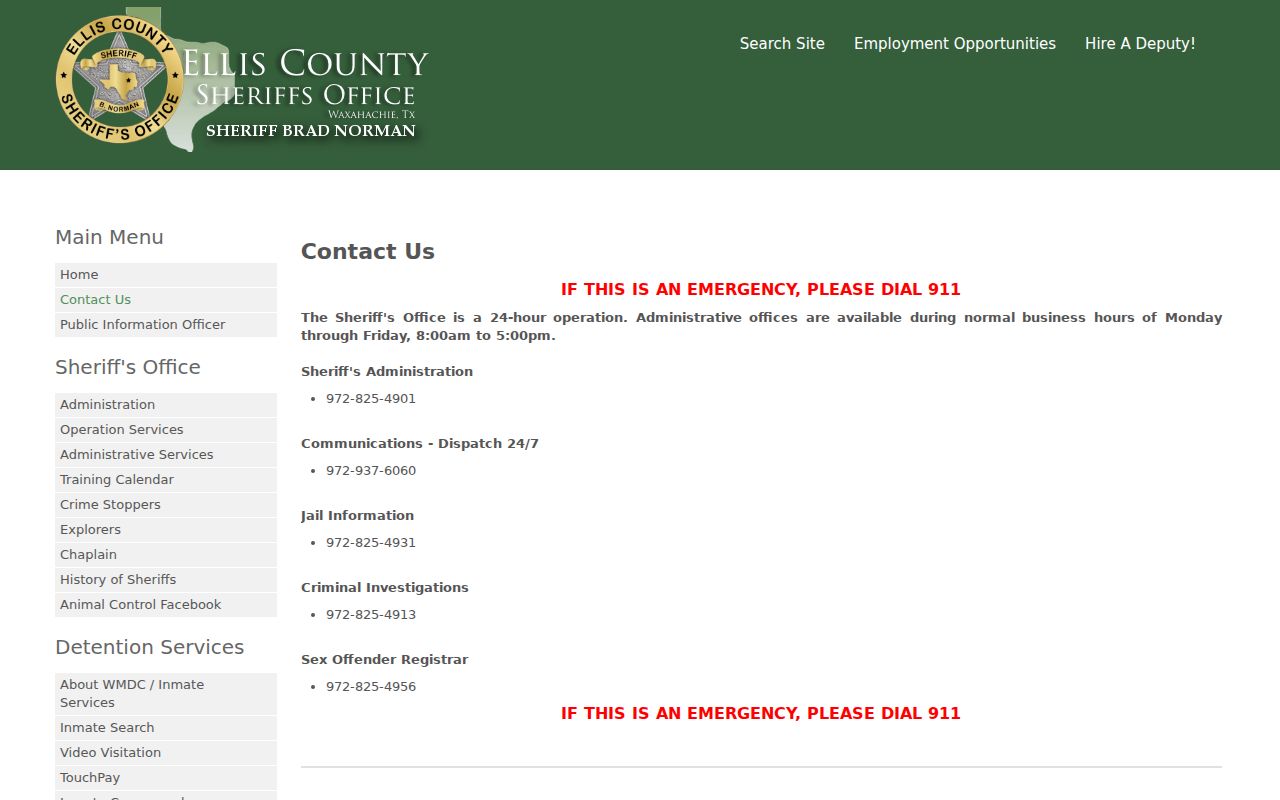
The local contact matters most for reporting duties, address verification, or suspected noncompliance, while the DPS portal remains the public lookup source.
Texas Public Sex Offender Registry Searches
The Texas Public Sex Offender Registry search offers three official approaches for Ellis County. The live portal changes dynamically, so use the current labels and available values. Ellis County research confirmed Name, Area, and Institution of Higher Education modes. It did not confirm the exact list of radius options, and those values should not be guessed.
- Open the official DPS registry and read its conditions and warnings before an Ellis County search.
- Select Name, Area, or Institution of Higher Education based on the fact you can verify.
- Enter the name components or geographic details requested by that mode, then use the live radius or institution controls when shown.
- Compare the result fields carefully and open the public profile for registration status, offense, agency, and address details.
| Field Label | Type | Required | Notes |
|---|---|---|---|
| Search mode | Tabs | Yes | Name, Area, or Institution of Higher Education |
| Name components | Text | Conditional | Use spelling or alias variations offered by the live form |
| Address, city, or ZIP | Text | Conditional | Used for an Area search; accepted format may change |
| Radius | Dropdown | Conditional | Use only the distance choices displayed live |
| Institution | Selector or text | Conditional | Used in the higher-education mode |
Note: A broad Ellis County area search may return many entries, so narrow the place only with facts the portal accepts.
Ellis County Registry Search Modes
An Ellis County name search works best when identity is already known. Area mode shifts the Ellis County question to a geographic point, using address, city, ZIP, and a live radius control. The college mode is a distinct institution-based search. Do not force one mode to answer another question. A similar name is not proof of identity, and a map pin alone should not replace the full Ellis County public profile.
The DPS registry results interface shows how search results lead to public profile details.
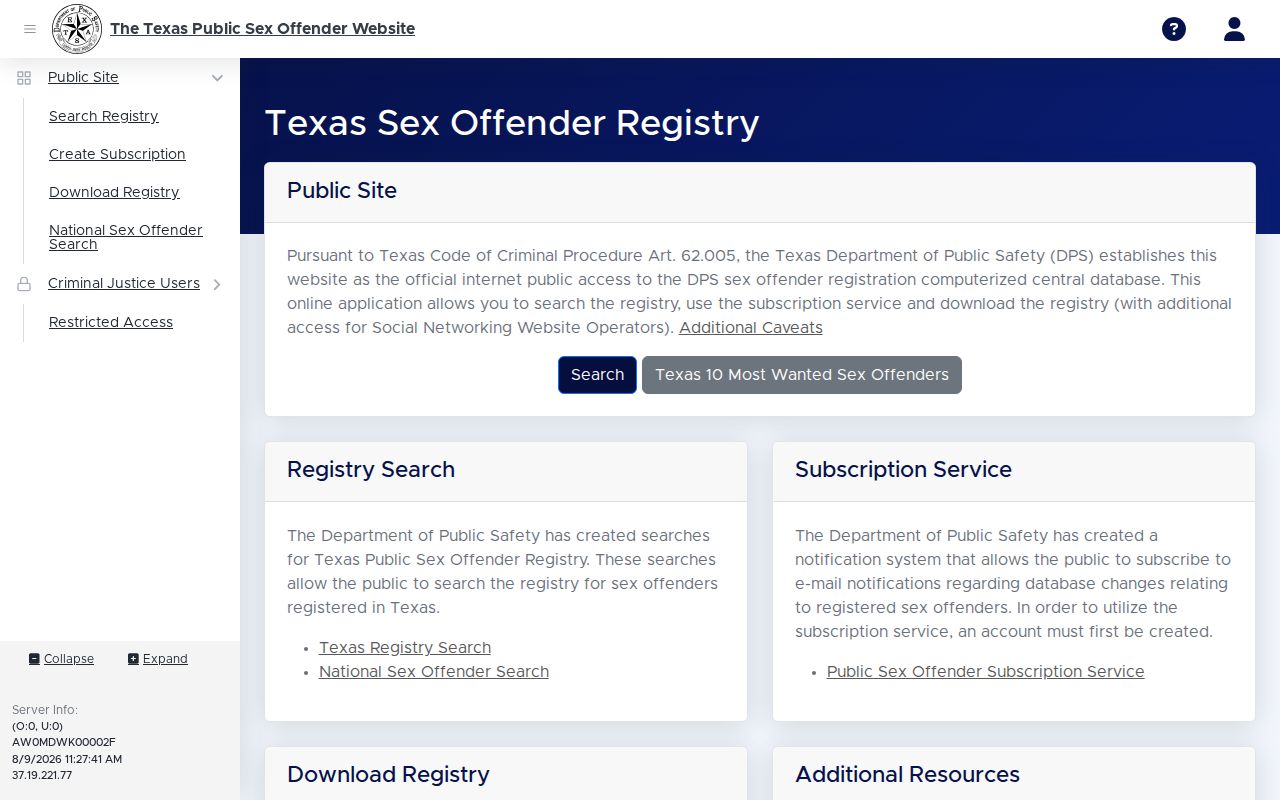
The results layout supports careful matching by several public descriptors instead of relying on one name or one point on a map.
Registry Profiles: What They Show
An Ellis County registry profile is based on more Texas registration data than the state releases publicly. Code of Criminal Procedure §62.051 calls for identifying and reporting information that can include fingerprints, Social Security and driver-license numbers, residence details, aliases, phones, a photograph, offense facts, punishment, and other statutory vehicle, work, school, and internet information. The Ellis County public view does not expose confidential Social Security numbers, driver-license numbers, or fingerprints.
| Name and aliases | Public identity names and available alternate names used to distinguish a match. |
|---|---|
| Photo and description | Photograph plus public physical traits, which can include height, weight, hair, eyes, scars, marks, or tattoos. |
| Registered address | The public residence detail or geographic description allowed for that profile. |
| Offense and statute | Reportable offense information, conviction date, and related legal details released publicly. |
| Registration category | Texas statutory duration and duty information, not a default federal Tier I, II, or III label. |
| Status and agency | Available compliance or registration status and the authority responsible for reporting or verification. |
Vehicle, work, school, victim-age, and offense data may also appear where law and the public interface allow. Ellis County profile fields can vary. Read the full record and its reporting date before drawing a conclusion from a short results card.
Ellis County Registry and NSOPW
The Texas registry is the source for Ellis County profiles and local reporting information. The National Sex Offender Public Website, operated by the U.S. Department of Justice, searches participating state, territorial, and tribal public registries. It is useful when a name or location question is not confined to Ellis County or when recent movement may cross a state line.
Use the DPS registry for Texas name, Area, or college searches and the state’s profile details. Use NSOPW when the place or identity question crosses state lines, then return to the contributing jurisdiction’s profile for the most direct public source.
The official NSOPW home screen illustrates the national search layer.
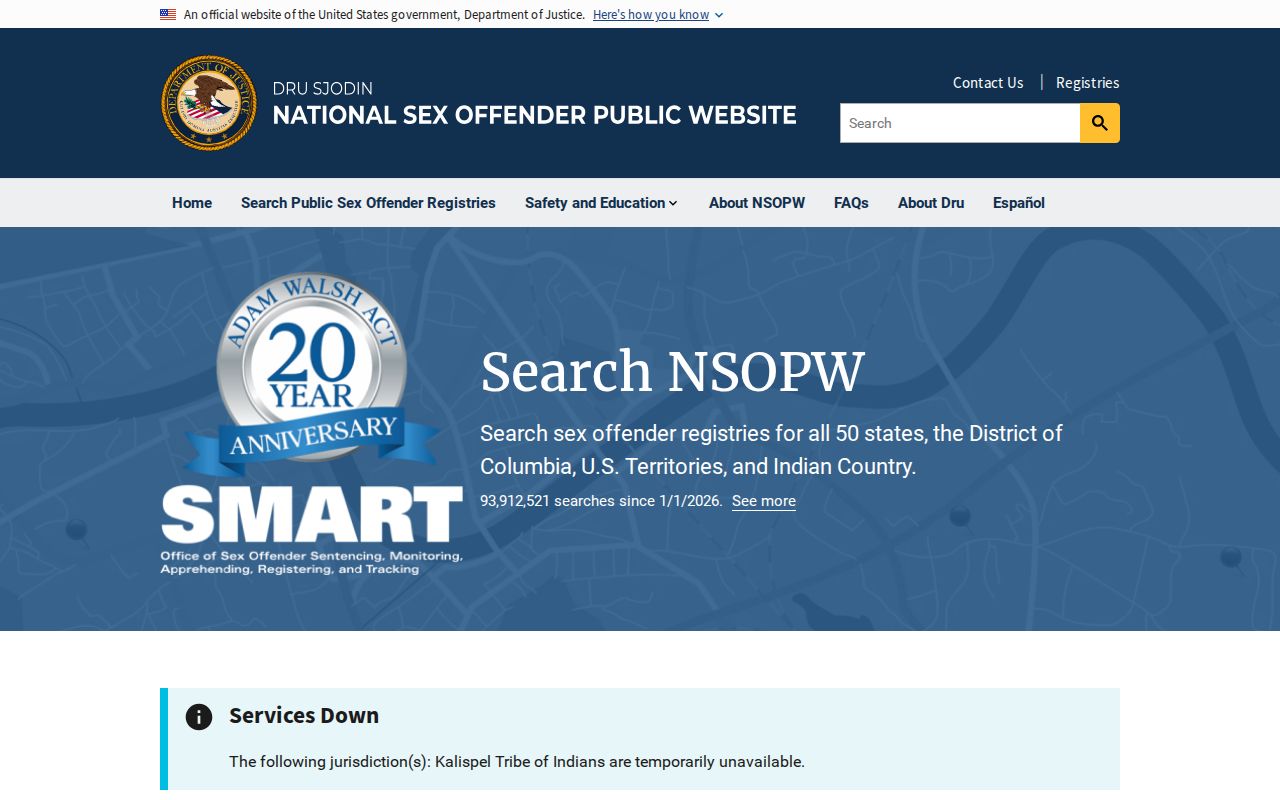
When a national result points back to Texas, review the current Texas profile and contact the correct local authority for a compliance concern.
Registration Levels and Duties in Texas
Ellis County registration duties do not reduce every Texas case to the federal-style Tier I, II, or III labels often seen elsewhere. Code of Criminal Procedure §62.101 ties the general period to the reportable offense and statutory category. Some severe or repeat categories require lifetime registration. Other reportable categories generally run for ten years after discharge, release, or the end of supervision. Juvenile adjudications follow a separate statutory and court-order framework.
| Texas category | General duration | Verification frequency |
|---|---|---|
| Enumerated severe, repeat, or lifetime category | Lifetime | Every 90 days for two or more sexually violent offenses |
| Civilly committed sexually violent predator | Applicable lifetime and civil-commitment duties | Every 30 days |
| Other reportable category under §62.101 | Generally 10 years after discharge, release, or supervision ends | Generally each year |
| Juvenile adjudication | Separate statutory duration or exemption framework | The statute and court order control |
The category is only one part of the duty. A person generally registers with city police when living within a municipality and with the sheriff or other local authority outside one. The official DPS registration program guidance should be checked for the current state process.
Ellis County Registry Verification
Ellis County verification frequency is not the same for every Texas registrant. A general reportable category may verify each year. A person with two or more sexually violent offenses generally verifies every 90 days, while a civilly committed sexually violent predator verifies every 30 days. Those intervals make the correct local authority important. The Ellis County Sheriff registrar handles the county area assigned by law, while municipal police handle their city residents.
Movement also creates a timeline. Registration generally occurs by the later of the seventh day after arrival or the first available date. Notice of an intended address change is generally made in person no later than seven days before the move, followed by registration with the new local authority no later than seven days after arrival. The exact duty depends on the profile’s governing facts and current statute.
The official text of Texas Code of Criminal Procedure Chapter 62 is the controlling source for the registration program.
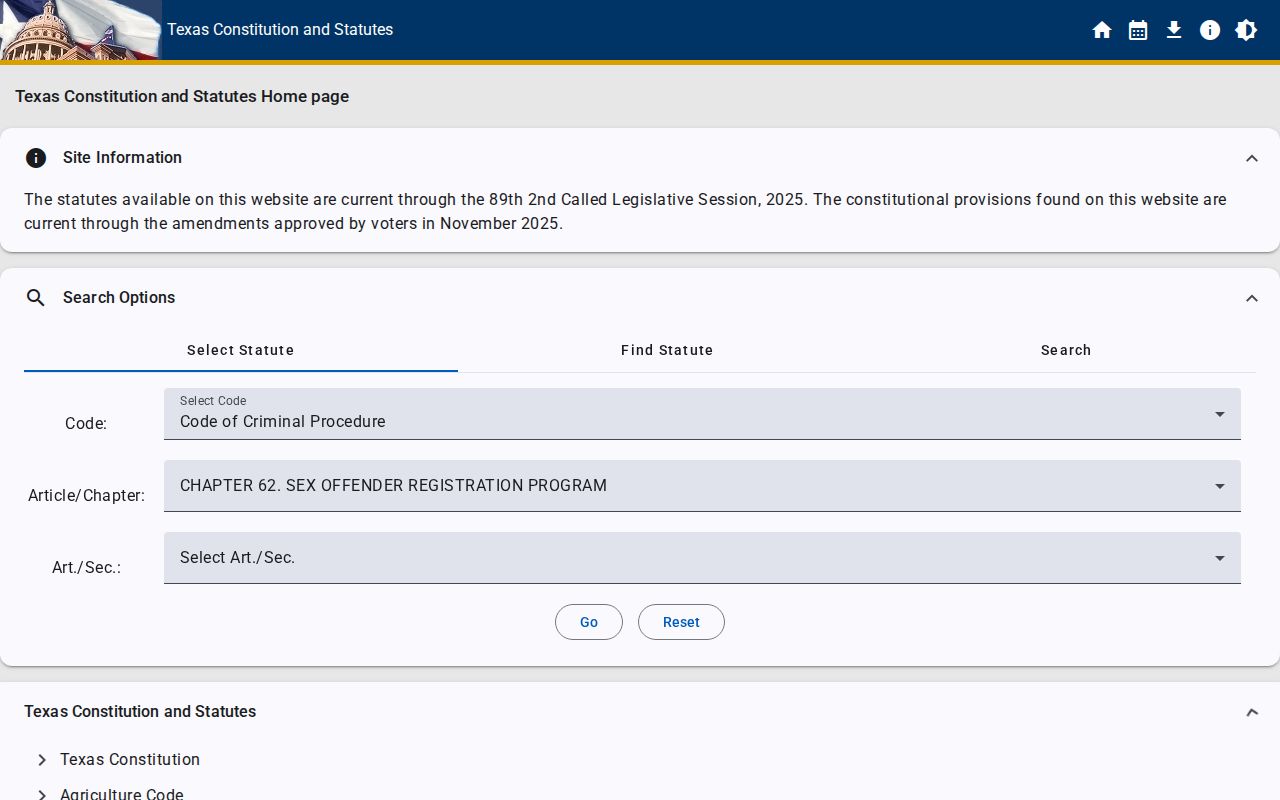
The statute source connects the public lookup with the reporting, verification, notification, and local-authority duties behind each profile.
Using Registry Information Lawfully
Registry information supports awareness and practical safety planning. Texas DPS may send bilingual postcards near the home of a high-risk registrant or civilly committed sexually violent predator, and a local authority may publish notice when Chapter 62 permits it. Public notice does not grant private enforcement power. A listing may change, and it should never be used to threaten a registrant, trespass, disturb a household, or conduct a personal compliance investigation.
Misuse is prohibited: Texas Code of Criminal Procedure Chapter 62 governs registry disclosure and public notification. Using registry information to harass, threaten, intimidate, trespass, or interfere with a registrant or household is prohibited and may be a crime.
Report an urgent safety issue through law enforcement. Send suspected registration noncompliance to the police department or sheriff that serves as the local registering authority. Do not attempt to verify an address in person. Provide the profile details and the reason for concern, then let the agency compare the report with information not shown publicly.
Ellis County Registry Address Concerns
An address that appears old can reflect delayed reporting, movement between local authorities, a data issue, or a suspected failure to comply. First reopen the full DPS profile and check the status, reporting agency, and available verification details. Confirm that the search matched the intended person. If the concern remains, call the Ellis County registrar at 972-825-4956 for an unincorporated county address or contact the police department for an address inside a city.
Give the agency the public profile facts and a clear account of the concern. Do not collect private data, publish accusations, approach the home, or ask neighbors to investigate. A registry entry is supplied by registrants and reporting agencies and can change. The local authority has the lawful tools to check compliance and update the state reporting path.
Note: A public profile is a safety notice, not proof that every displayed fact is current at the moment of viewing.